Lagos, Nigeria – March 2026
A total of 87 rural women farmers from Epe, Iju, Ikorodu, and the Rose of Sharon Foundation Widows Group have successfully completed a two-day Climate-Smart Agriculture Capacity Building Training Workshop organized by the International Centre for Environmental Health and Development (ICEHD) under the Grassroots-Driven Climate Action Project – Year 2.
The training, held at Iju Water Works in Ifako-Ijaiye, Lagos, brought together women farmers to strengthen their capacity in climate-resilient agriculture, sustainable farming practices, organic input production, and agribusiness development.
As climate change continues to threaten food production and livelihoods across Nigeria, the workshop was designed to equip women farmers with practical knowledge and tools to improve agricultural productivity while protecting the environment.
Speaking during the training, facilitators emphasized the importance of adopting climate-smart agricultural practices such as crop rotation, intercropping, efficient water management, organic composting, and environmentally friendly pest control methods. Participants also learned cost-effective techniques for improving soil fertility using locally available materials and received hands-on demonstrations on the production and application of organic compost and organic pesticides.
The workshop featured sessions facilitated by agricultural and environmental experts, including Mr. Durojaiye Segun, Dr. Olayiwola Onasanya, and Dr. Bukola Toyin Sadiku, who shared practical solutions to common farming challenges faced by rural women.
Beyond technical farming skills, participants received training on agribusiness management, value addition, food processing, marketing, and income diversification strategies aimed at improving household incomes and strengthening local agricultural value chains.
One of the major highlights of the programme was the practical demonstration sessions, where participants gained first-hand experience in producing organic farm inputs using materials readily available within their communities. These demonstrations reinforced the workshop’s focus on low-cost, sustainable, and environmentally responsible farming practices.
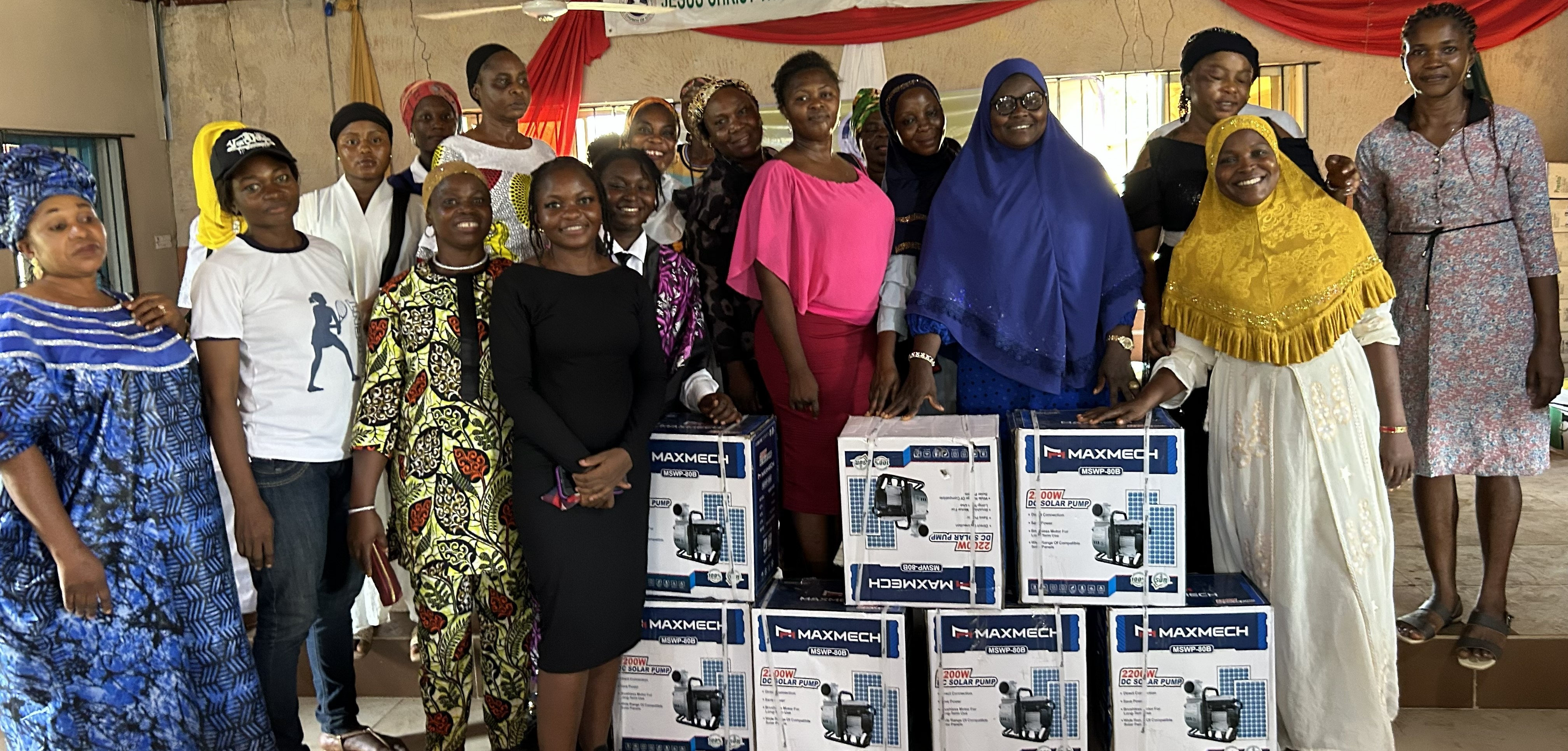
To support immediate application of the knowledge gained, ICEHD distributed farm tools, equipment, and organic seeds to participants. Items distributed included solar irrigation pumps, sprinklers, handheld irrigation cans, knapsack sprayers, organic fertilizers, vegetable seeds, and other essential farming inputs.
Participants expressed enthusiasm about the training and noted that the knowledge gained would help them address challenges related to declining soil fertility, crop pests, unpredictable rainfall patterns, and rising farming costs. Many also highlighted the value of networking with fellow farmers and sharing experiences across communities.
According to ICEHD, the workshop forms part of ongoing efforts to empower grassroots women farmers with the skills, resources, and confidence needed to build climate resilience, improve food security, and strengthen sustainable livelihoods.
The training concluded with post-evaluation exercises, which indicated improved understanding of climate-smart agriculture, organic farming techniques, and sustainable agribusiness practices among participants.
Through initiatives such as this, ICEHD continues to advance community-led climate action by ensuring that women farmers are not only beneficiaries of development programmes but active leaders in building resilient and sustainable agricultural systems across Nigeria.